A practical guide from Visioncare Opticians for spectacle lenses, coatings, materials, and fit — everything you need to make an informed choice that serves you from morning to night and from daywear to evening wear!
There are 4 areas to consider when making your eyewear selection; Our Optometrists will always be on hand on guide you and make the process seamless.
- Lenses
- Coatings
- Materials
- Fit
Lenses
UV400 Protection
The single non-negotiable us UV protection. UV400 certification means the lens blocks all ultraviolet light up to 400 nanometres — covering both UVA and UVB rays. Prolonged UV exposure is the leading cause of cataracts and macular degeneration. Darkness of tint is irrelevant; always look for an explicit UV400 or “100% UV protection” label. Cheap, untreated lenses can actually be worse than no lenses at all, because the pupil dilates behind a dark tint, letting in more unfiltered radiation. All our spectacle lenses at Visioncare Opticians have UV blocking properties.
Blue Light Filtering
High-energy visible (HEV) blue light from screens contributes to digital eye strain — symptoms include dryness, headache, and difficulty refocusing. Blue-light-filtering lenses reduce this exposure without significantly altering colour perception. For heavy screen users, this coating is increasingly considered standard rather than optional. Look for lenses that filter 420–450nm wavelengths specifically. At Visioncare Opticians we supply lenses with the blue light built into the lens thus improving their appearance and functionality.
Our eyezen lenses which are recommended to all VDU use go even further to alleviate digital eye strain. They are enhanced single-vision lenses with extra support for near vision (like reading or phone use). They help reduce strain from constantly focusing on screens. They provide Clearer, more comfortable vision and the lens design improves contrast and readability of small text on screens.
They don’t have visible segments like bifocals and feel like regular glasses, hence providing smooth vision.
- Materials
Lens Material & Index
Lens index (also called refractive index) tells you how efficiently a lens material bends light. In simple terms, it determines how thick or thin your eyeglass lenses will be. 👓
- Higher index = bends light more → thinner & lighter lens
- Lower index = bends light less → thicker lens
At Visioncare Opticians our practitioners will advise which index will suit you best dependent on; your prescription, type of frame and previous history.
Glass is optically perfect but heavy and fragile, we rarely recommend it for daily wear.
Coatings
Anti-Reflective (AR) Coating, also knows as Multi- Anti reflective coating (MAR)
AR coating eliminates the halo glare from headlights, screens, and overhead lighting that makes prescription lenses tiring to wear. It also removes the reflective “fish-eye” effect that makes your lenses opaque in photographs. Premium multi-layer AR coatings also repel water, oil, and dust — making them easier to clean and dramatically extending visual clarity throughout the day.
Scratch-Resistant Coating
No lens is scratch-proof, but a hardened coating significantly extends optical quality over time. Plastic and polycarbonate lenses are especially vulnerable without it. Cleaning the lenses with a quality microfibre cloth ensures lenses remain optically clear for the life of the frame.
Hydrophobic & Oleophobic (Easy-Clean) Coating
Our MAR coatings, a hydrophobic top coat causes water to bead and roll off the lens surface, while an oleophobic layer repels fingerprint oils and facial grease. The practical result: fewer cleans per day, and each clean requires less pressure — protecting the underlying AR and scratch coatings from premature wear. In humid climates or for frequent outdoor users, this is one of the most noticeable quality-of-life upgrades available.
All our lenses are Visioncare Opticians come with a scratch resistant and MAR coating as standard.
The best pair of glasses you will ever own is the one engineered for your daily life — not the one that simply looks good on the shelf.
— The Vision Edit, Everyday Optics Guide
Tints
This is fun one; with an ever increasing range of tinted lenses, the option are endless
Transition Lenses commonly known as photochromic lenses
They darken in UV light and return to clear indoors, eliminating the need for a separate pair of sunglasses for most users. Modern versions react in under 30 seconds and activate even on overcast days. Key caveat: standard versions do not activate fully inside cars due to UV-blocking windshields — look for “XTRActive” variants if you drive frequently.
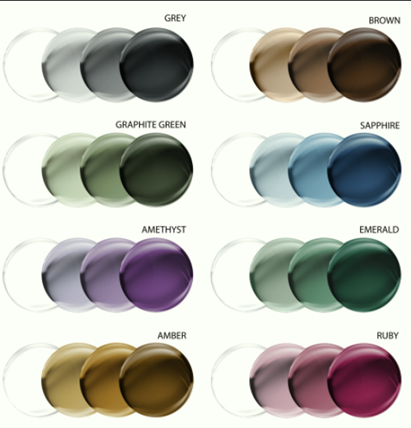
Traditionally they used to be available only in grey and brown. Now we have a whole host of colours available from amethyst to Saphire.
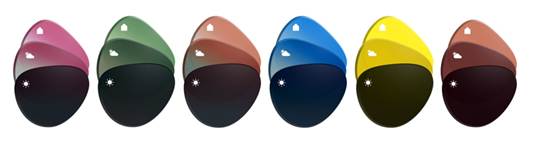
In Additional to colour changing spectacle lenses you can also have tint or mirror coatings applied to the lens; for clinical/lifestyle purposes or simply for fun!
Frame Material
-One of our most popular frame materials is Titanium; ultra-light sometimes referred to as feather light! completely hypoallergenic and corrosion-proof. The famous Lindberg frames are made of titianium- one of best selling brands!
-Acetate (cellulose-based plastic) offers rich colour and pattern options with comfortable flexibility.
-Stainless steel balances durability and affordability. Avoid zinc alloy or low-grade “white metal” frames, which corrode, deform, and rarely hold adjustments reliably over time.
Correct Frame Fit
Ultimately this needs to be spot on;
Optical centres must align precisely with your pupils (PD measurement). Frames sitting too low cause you to look through the wrong zone of the lens, causing fatigue. Bridge width should distribute weight evenly across the nose without pinching. Temples should clear the ears cleanly without bending or applying pressure behind them.
Adjustable Nose Pads
Silicone or acetate nose pads that can be repositioned by an optician are essential for long-wear comfort. Fixed nose bridges (common in acetate frames) are less customisable. Properly fitted pads prevent the glasses sliding down during physical activity, and eliminate the red marks that come from uneven pressure on the nasal bridge.
At a Glance
| # | Feature | Category | What to Look For |
| 01 | UV Protection | Lens | UV400 certification; blocks 100% UVA + UVB regardless of tint darkness |
| 02 | Lens Material | Material | Higher index (1.67+) for strong prescriptions; polycarbonate or Trivex for safety |
| 03 | Anti-Reflective Coating | Coating | Multi-layer AR with water and oil repellency; avoids glare from screens and headlights |
| 04 | Scratch-Resistant Coating | Coating | Factory-applied hardened coat; essential for plastic and polycarbonate lenses |
| 05 | Frame Material | Material | Titanium for lightness and durability; acetate for colour range; avoid zinc alloy |
| 06 | Blue Light Filtering | Lens | Filters 420–450nm HEV light; recommended for 6+ hours of daily screen use |
| 07 | Frame Fit & PD | Fit | Optical centres match pupillary distance; temples straight, bridge distributes weight evenly |
| 08 | Photochromic Lenses | Lens | Fast-reacting modern variants; XTRActive if frequently driving |
| 09 | Adjustable Nose Pads | Fit | Silicone pads on adjustable arms; prevents slipping and pressure marks |
| 10 | Hydrophobic Coating | Coating | Repels water and oil; extends AR coating lifespan; reduces daily cleaning frequency |